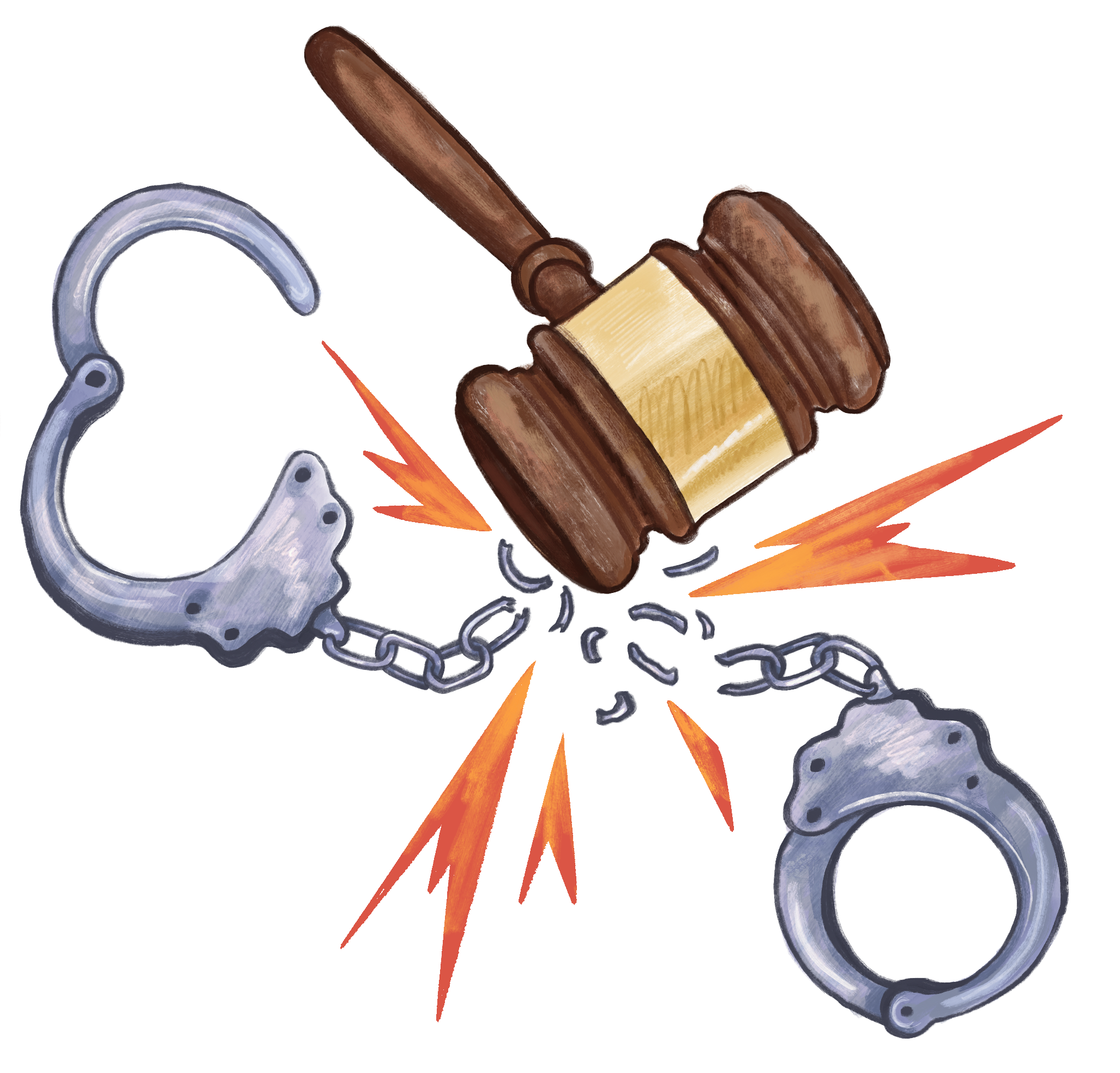
In October 2013, a federal judge sentenced former Detroit mayor Kwame Kilpatrick to 28 years in prison for a racketeering conspiracy involving extortion, bribery, and fraud. But part of Kilpatrick’s downfall didn’t emerge from a law enforcement investigation: Instead, it came from a public records request made by a Detroit newspaper.
Public records laws, which require government agencies to provide the public with access to government files upon request, are a key part of the democratic society in which United States residents live. These laws vary state by state and at the federal level, but they generally let members of the public oversee government agencies, ensure accountability, and stay informed about civic matters. Yet, despite public records laws like the federal Freedom of Information Act (FOIA) and similar pieces of legislation in all 50 states, agencies frequently leave records requests unanswered for far longer than their statutorily mandated deadlines (federal agencies are given 20 business days to make an initial determination on requests). To promote transparency, accountability, and democratic principles, the public records system in the United States must be reformed. Doing so requires understanding and addressing four root causes of the problem: increased requests, staffing shortages, disorderly recordkeeping, and a broader issue in agencies’ fundamental understanding of the importance of public records.
First, though, it is important to note the scope of the unfulfillment of public records requests. In fiscal year 2025, fewer than half of records requests to federal agencies resulted in responsive documents of any kind. With an average wait time of over 240 days, the federal backlog had peaked at nearly 340,000 unfulfilled requests as of September 2025. Similar issues were documented at the municipal level: Boston’s average response time was 35 days in 2024, and in New York City, 16 percent of public records requests made in 2024 remained unfulfilled after one year. Such rates of unresponsiveness are inconsistent with democratic principles and the intention behind these laws. By leaving so many requests incomplete far longer than they are supposed to, federal and state-level agencies are depriving their residents of a right the law promises. This deprivation can have serious potential consequences, especially considering that public records requests have already had many significant real-life impacts in areas such as corruption. Information obtained from these requests has exposed mayoral impropriety, uncovered misconduct among judges, and helped discover corruption in Alabama’s two-year college system, leading to firings and reform. In 2025, a team of investigative newsrooms used public records to force the Mississippi Department of Corrections to reopen investigations into homicides within its facilities, finding that at least 43 people were killed in Mississippi prisons over 11 years, yet dozens had gone unprosecuted. One study found that when states transition from weak public records laws to strong ones, actual corruption drops by about 20 percent, once the initial increase is detected and convicted cases are accounted for. But it is not only when a public records request may have a significant impact that it should be dealt with promptly. In keeping with America’s promise of equal treatment under the law, each request deserves proper attention, no matter its potential impact. The question, then, becomes what is causing this backlog and how the government can address it.
Increased requests, combined with fewer staff, have widened the gap between the number of records requests coming in and records offices’ ability to respond. In Massachusetts, for instance, public records requests almost doubled between 2017 and 2024, leaving five full-time staff members and four co-op students to review roughly 10,000 yearly requests. Federal requests are growing in both complexity and number. Several factors may contribute to this increase, including the evolution of artificial intelligence, which has made submitting requests easier, and bulk requests from think tanks and other organizations. In New Hampshire, state officials blamed data-mining firms for submitting mass requests.
Downsizing during Donald Trump’s second term has made it nearly impossible for federal agencies to keep up with the surge of requests. Several agencies’ FOIA offices revealed the scale of such cuts: The Defense Department saw a 37 percent loss or turnover rate of FOIA officers, the Department of Housing and Urban Development lost 40 percent of its FOIA staff, and the General Services Administration’s central administrative office, which handles most of its FOIA responses, lost 30 percent of its staff. Other agencies, including the Departments of Education, Transportation, and Commerce, have had similar staffing declines in Trump’s second term. Though the overall backlog is not only Trump’s doing—federal agencies struggled to fulfill requests promptly under Joe Biden as well—critics have noted that Trump’s deliberate slashing of federal employees’ positions has played a significant role.
Disorderly recordkeeping and faulty practices have also contributed to the delays at both the federal and state levels. A 2025 assessment by the federal Chief Records Officer found that many agencies kept records past their retention deadlines; nearly half of all searches uncovered some records that should have been disposed of. This slowed down the agencies’ response rates, as officials would expend time sifting through records that should have been removed. (Whether retention policies are too long is a separate question.) Similarly, a 2015 audit by Oregon’s Secretary of State noted that “poor record retention management” and the keeping of records longer than required contributed to challenges that the state’s agency was facing in responding to requests. In California, poor records management was found to have contributed to the Department of Rehabilitation’s low response rate to public records requests.
There are various solutions to these three issues that have worked in practice across the nation. Addressing the increase in requests is the most difficult: Not only is the volume of requests difficult to reduce, especially from the government’s perspective, but limiting requests would run counter to the purpose of public records laws. However, allowing for more automation and proactively disclosing frequently requested records can help agencies respond to the higher rates of requests. As mentioned earlier, some attribute the increase in requests to artificial intelligence: Agencies can also leverage the technology in their favor by using it to help respond to requests.
Staffing shortages are not unique to public records offices, but investment in personnel can help agencies respond better. Albuquerque, New Mexico added staff members to its public records office in 2024, reducing its backlog by 23.9 percent. In Spokane, Washington, the Records Director hired five new employees, helping the department clear its backlog entirely. And at the federal level, the US Citizenship and Immigration Services had 40 employees join its FOIA staff in the mid-2010s, helping its office make progress against its backlog of requests. Government agencies throughout the United States continually face these issues, and records request offices must compete with other departments for limited resources. Still, pervasive staffing shortages do not excuse the government from depriving the public of its legally mandated access to government records; the government must work to provide these offices with the resources that all government agencies need while also attempting fixes that are specific to public records systems, such as the ones below.
Enforcing good recordkeeping may bring about sizable improvements, and several jurisdictions have found success by improving their recordkeeping practices. A 2025 report from Portland, Oregon recognized an effort that established a centralized records request system to clear sizable backlogs in city departments. The aforementioned Albuquerque reforms also included the digitization of frequently requested records that improved department efficiency. Further, the Federal Office of Government Information Services underscored the importance of robust recordkeeping in a 2015 blog, saying that “strong agency record keeping is the backbone of a good Freedom of Information Act (FOIA) office.” Ensuring adequate recordkeeping, then, provides an upstream solution to help records offices respond to requests and prevent backlogs from accumulating.
In addition to these concrete reforms, government agencies must shift their understanding of the importance of records requests to ensure that any reforms translate from paper to practice. The goal is not merely to establish a more efficient bureaucratic process for the public to obtain government documents, but rather to create an environment wherein the government makes its workings accessible to those it serves. FOIA’s own website describes its purpose as ensuring “an informed citizenry,” which it characterizes as “vital to the functioning of a democratic society.” In other words, Americans cannot be truly informed unless the government embraces its responsibility to uphold the public’s right to information. Countries across the Atlantic have demonstrated that valuing public records requests highly is correlated with a strong public records system. In Sweden, for instance, the principle of public access to official documents (called “offentlighetsprincipen”) is part of one of its four fundamental laws. Accordingly, Sweden ranks fifth globally in government transparency (the United States is tied for 25th with ten other countries). This idea should translate to the United States: By treating public records requests with proper respect, American agencies across the nation will give the public the right to transparency, accountability, and knowledge that they deserve.